Make it Pay
Microgreens: the shortest cash cycle on a smallholding
Seven to fourteen days from sowing to selling, in a space the size of a bookshelf. The shortest cash cycle available — and the tightest margins, if you get the seed price wrong.
The short answer
Microgreens go from seed to harvest in 7–14 days, making them the shortest cash cycle available on a smallholding. A standard 10-inch tray yields 150–300 g. Profitability turns almost entirely on seed cost per tray — buy seed in bulk agricultural quantities, never in retail packets, or the economics do not work at all.
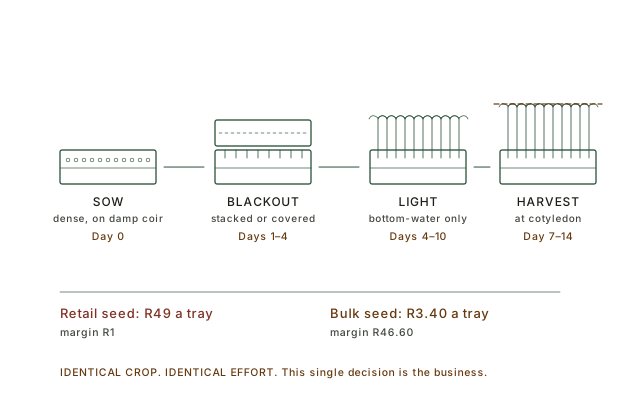
Nothing else on a smallholding turns money round this fast. Sow on a Monday, sell a fortnight later, and do it again in the same trays.
It is also the enterprise with the least margin for sloppiness on inputs, because the crop is so short that seed is the dominant cost and there is nowhere to hide an error.
What actually makes or loses money
Two things, and neither is growing technique.
Seed cost per tray. A tray needs 25 to 30 grams of seed, and a retail seed packet holds a fraction of that. Retail seed is priced for a windowsill, and buying it that way is what quietly turns this from a business into an expensive hobby — the seed alone can cost more than the tray sells for. The same variety bought as agricultural seed, in 5 or 25 kilogram quantities, is a different order of price entirely. Price bulk seed before you price anything else, because it decides whether the enterprise works at all.
That single decision is the difference between a hobby and a margin. Nothing else in the process comes close to mattering as much.
The buyer. Same as mushrooms, and for the same reason: the product has a shelf life measured in days. Restaurants and delis, agreed weekly, before you sow anything.
The method, briefly
- Sow densely on 25–30 mm of damp coir. Microgreens are harvested before they compete, so density that would be absurd for a normal crop is correct here.
- Blackout for 3–4 days. Stack the trays or cover them. This is what produces the stem length buyers want — greens grown in light from day one are short and sell badly.
- Uncover and light for the remaining 4–10 days depending on species.
- Bottom-water only once uncovered. Water sitting on the leaves is how you get damping-off, and a tray lost to it is lost entirely.
- Harvest at cotyledon or first true leaf, with a clean sharp blade, dry.
Which species to start with
Sunflower, pea, radish and broccoli. All four are fast, forgiving, and have a market. Sunflower and pea are the most reliable sellers because they have substance rather than being purely a garnish.
Avoid mucilaginous seeds — basil, chia, cress — until you are confident. They gel when wetted and are genuinely harder to sow evenly.
What went wrong
The second mistake was overwatering from above in the first week. Damping-off took most of a sunflower tray in about two days and it is not recoverable — once it starts, that tray is finished.