Grow
Building a worm farm that actually works
Two stacked crates, roughly twenty minutes a week, and it turns the thing you currently throw away into the most valuable soil amendment on the property.
The short answer
A working worm farm is two stacked crates, drainage, bedding and a lid, and it processes an ordinary household's kitchen waste into castings continuously. The three things that kill a bin are heat above 30 °C, waterlogging, and feeding faster than the worms can process. Get those right and it runs for years with almost no attention.
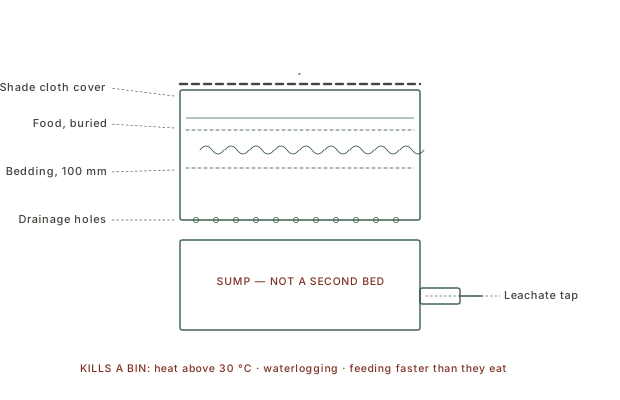
Of everything in these conditions, the worm farm has the best ratio of value produced to attention required. It cost less than a dinner out, it takes about twenty minutes a week, and it converts the one waste stream every household already has into the single most useful thing you can put on a bed.
It is also the piece of advice most often given badly. Almost every guide describes a system that will cook in an inland South African summer.
What does a worm farm cost to build?
Very little, and less again if you already have the crates.
One kilogram of worms is roughly a thousand animals. They will double in about ninety days given the right conditions, which means the bin becomes self-sustaining and you will be giving worms away by the second season.
How to build it
- Drill twenty 6 mm holes in the base of the upper crate for drainage, and a line of them near the top rim of both crates for air.
- Fit the tap into the side of the lower crate, near the base. The lower crate is a sump. It is not a second worm bed, and treating it as one is how bins drown.
- Bed the upper crate 100 mm deep with damp shredded cardboard and coir. Wring it out first — it should be as wet as a squeezed sponge and no wetter.
- Add the worms and leave them a week before feeding. They need to settle.
- Feed into one quarter of the surface at a time, and bury it under the bedding. Rotate quarters.
The three things that kill a bin
Heat. Eisenia fetida die above roughly 30 °C, and the inside of a black plastic crate in an inland South African summer sun will pass that before ten in the morning. This is the single most common failure here and almost no international guide flags it, because their summers do not do this. The bin goes in permanent deep shade, on the south side of a wall, and never in a greenhouse or against a north-facing wall.
Water. Kitchen waste is mostly water and it keeps arriving. If the bin has no working drainage the bed goes anaerobic, turns black and starts to smell of ammonia. That smell is the only warning you get.
Overfeeding. A kilogram of worms processes roughly half its own weight a day at best, and less while establishing. Food that sits uneaten ferments, heats and attracts flies. If there is still food visible from the previous feed, do not feed.
What to feed and what to keep out
- Yes: vegetable and fruit trimmings, coffee grounds and filters, tea leaves, crushed eggshell, shredded cardboard, torn paper.
- No: meat, dairy, oil, anything cooked with fat, citrus in quantity, onion and garlic in quantity, and anything salted.
- Careful: bread and grains ferment fast and attract flies. Small amounts, buried deep, or not at all.
What went wrong here
Shade is not a place you decide once. Walk the site at midday in midsummer before you commit, because the shadow you see in June is not the shadow you get in December.
Harvesting without sorting worms by hand
Stop feeding one side of the bin for a fortnight and feed the other side heavily. The worms migrate. Lift the finished side out with a trowel; you will still get a few stragglers, which go straight back in.
The leachate from the sump is not worm tea in the way the internet uses the phrase — it is drainage, and if the bed has ever gone anaerobic it can do more harm than good. Dilute it heavily, ten to one, and use it on established plants rather than seedlings.